The Author & Artist
Katrina van Grouw


About Katrina
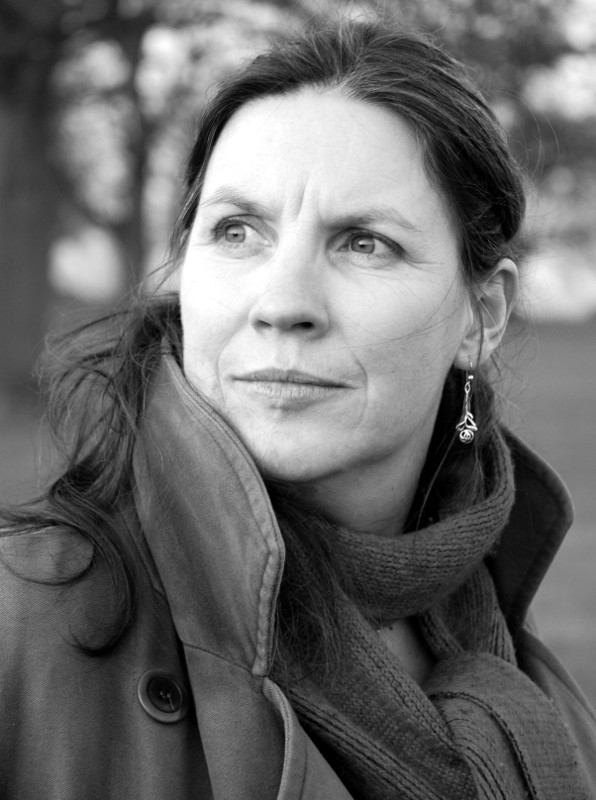
Katrina van Grouw’s long and varied career has bridged the divide between art and science, but always with birds at the centre. A former bird ringer, preparator of museum specimens, curator of ornithology collections at a major museum, author and journalist, fine artist, and an expert in historical bird art, she’s a self-taught scientist with a lifelong passion for birds, landscapes, and the natural world. Katrina’s life has been shaped by her forty-year journey to bring her magnum opus, in its recently published definitive version: A New Unfeathered Bird, into existence. Her other books include The Unfeathered Bird and Unnatural Selection.
Foundations
From childhood, Katrina’s interests lay as much in natural history as in drawing. Her exceptional ability as a young artist led teachers to encourage her towards art, while her own curiosity repeatedly drew her back towards biology. Over time, however, the formal route into science became harder to follow without the required A Level subjects, and art school became the practical path available to her.
That route ultimately gave Katrina the visual training that would later become central to her books. Today she prefers to think of herself as an author rather than simply an artist. Her drawings are created in service of the books, and it is the collective work of science, brought together through writing and illustration, that has become the larger creative achievement.
Skeleton Preparation and Anatomical Accuracy
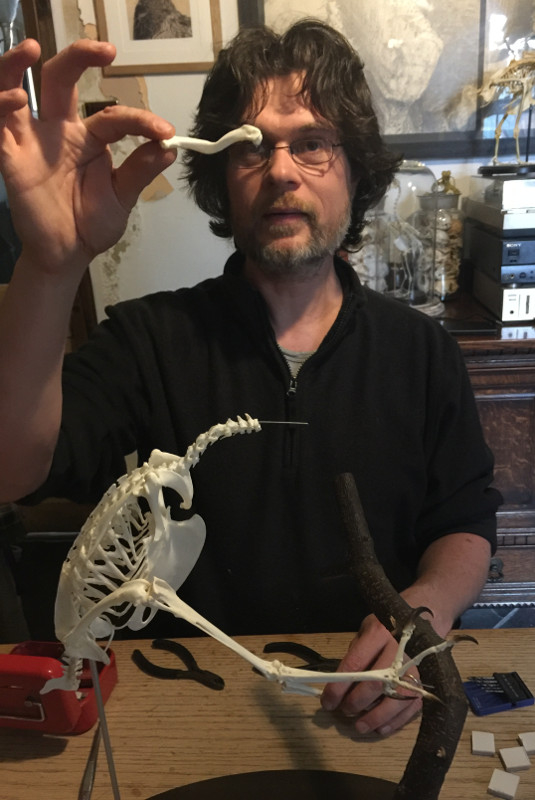
The skeletal preparations featured in Katrina’s books reflect a high level of technical skill and anatomical understanding. Much of the preparation and articulation work was undertaken by her husband, Hein van Grouw, with both Katrina and Hein bringing detailed knowledge of animal structure to the process.
Articulating skeletons is painstaking work. Specimens must be cleaned, degreased, bleached, wired, glued, and assembled with great precision. Each skeleton can take weeks to complete, and one of the greatest challenges is achieving a posture that reflects the living animal accurately. Ribs, vertebrae, toes, and fingers must be placed in the correct order, and the final result depends on both practical skill and deep biological knowledge.
Anatomical Drawing
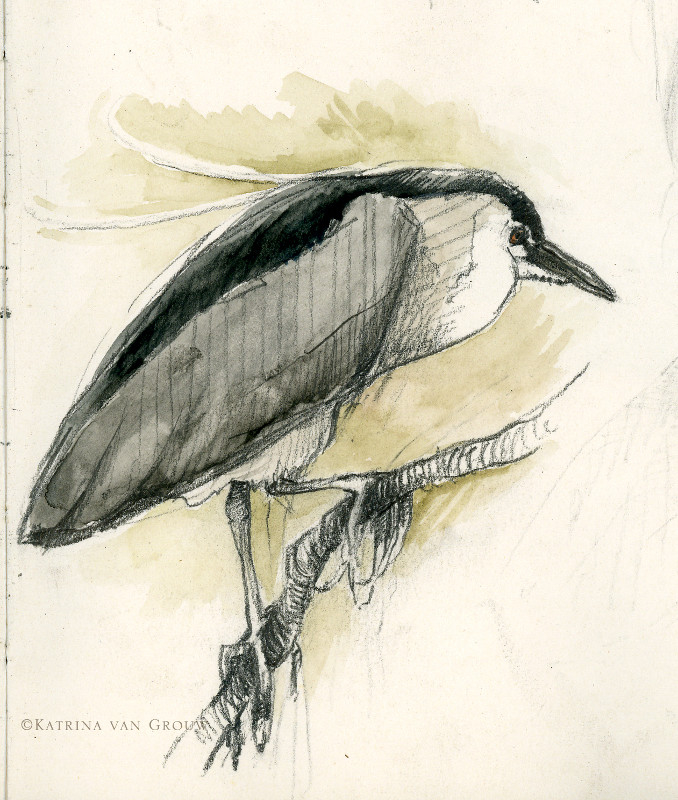
Katrina’s book illustrations are drawn in pencil, usually using a standard B or 2B grade. For very fine anatomical details, such as teeth, she sometimes uses a harder pencil grade. The drawings are then scanned and adjusted digitally for levels and colour, combining traditional hand drawing with careful digital preparation for publication.
Katrina prefers to describe much of this work as anatomical drawing rather than skeletal art. She began drawing directly from specimens she dissected herself as a way of understanding bird anatomy more deeply, so that her drawings of living birds would become more accurate and informed.
In her books, anatomical drawings are not presented as isolated artworks but as illustrations that help communicate scientific ideas. They are part of illustrated science books, shaped by both intellectual enquiry and creative discipline.
An Interdisciplinary Path
The route to producing books such as The Unfeathered Bird and Unnatural Selection was long, individual, and unconventional. No single qualification or career step explains the outcome. Instead, Katrina’s work reflects the cumulative value of fine art training, natural history illustration, museum experience, independent study, and an enduring fascination with evolutionary biology.
For those interested in combining art and science, Katrina’s example points less towards one prescribed course of study and more towards passion, determination, integrity, and the confidence to follow one’s instincts.
Katrina worked for seven years at the Natural History Museum in London as curator of the bird skin collections, a role equivalent to collections manager in many American museums. Her work included sourcing and preparing specimens, caring for collections, overseeing scientific visitors, entering data, responding to bird-related enquiries, and contributing to occasional public engagement.
Although her museum work was not an artistic role, it gave her direct experience of ornithological collections, scientific practice, specimen preparation, and the daily responsibilities of caring for material used by researchers. These experiences formed part of the wider body of knowledge that now informs her books.
Books as a Life’s Work
Katrina describes her books less as a living than as a life’s work. They demand years of research, writing, drawing, observation, and revision. A single non-fiction book can take five or six years of full-time work, making it difficult to produce a consistent income from books alone.
Like many authors, she relies on readers buying books new, requesting them from libraries, respecting copyright, and valuing the time and expertise involved in creating long-form illustrated non-fiction.
Katrina took the name van Grouw when she married her Dutch husband, Hein van Grouw, in 2009. Her earlier work, including Birds published in 2007, appeared under her maiden name, Katrina Cook, which remains associated with the artwork she produced at that time.
Her surname is often mispronounced. “Grouw” should rhyme with “how”, although Dutch speakers would pronounce it with a rough “G”. Katrina herself is English by adoption, with Welsh and Italian family roots.
Further Reading